

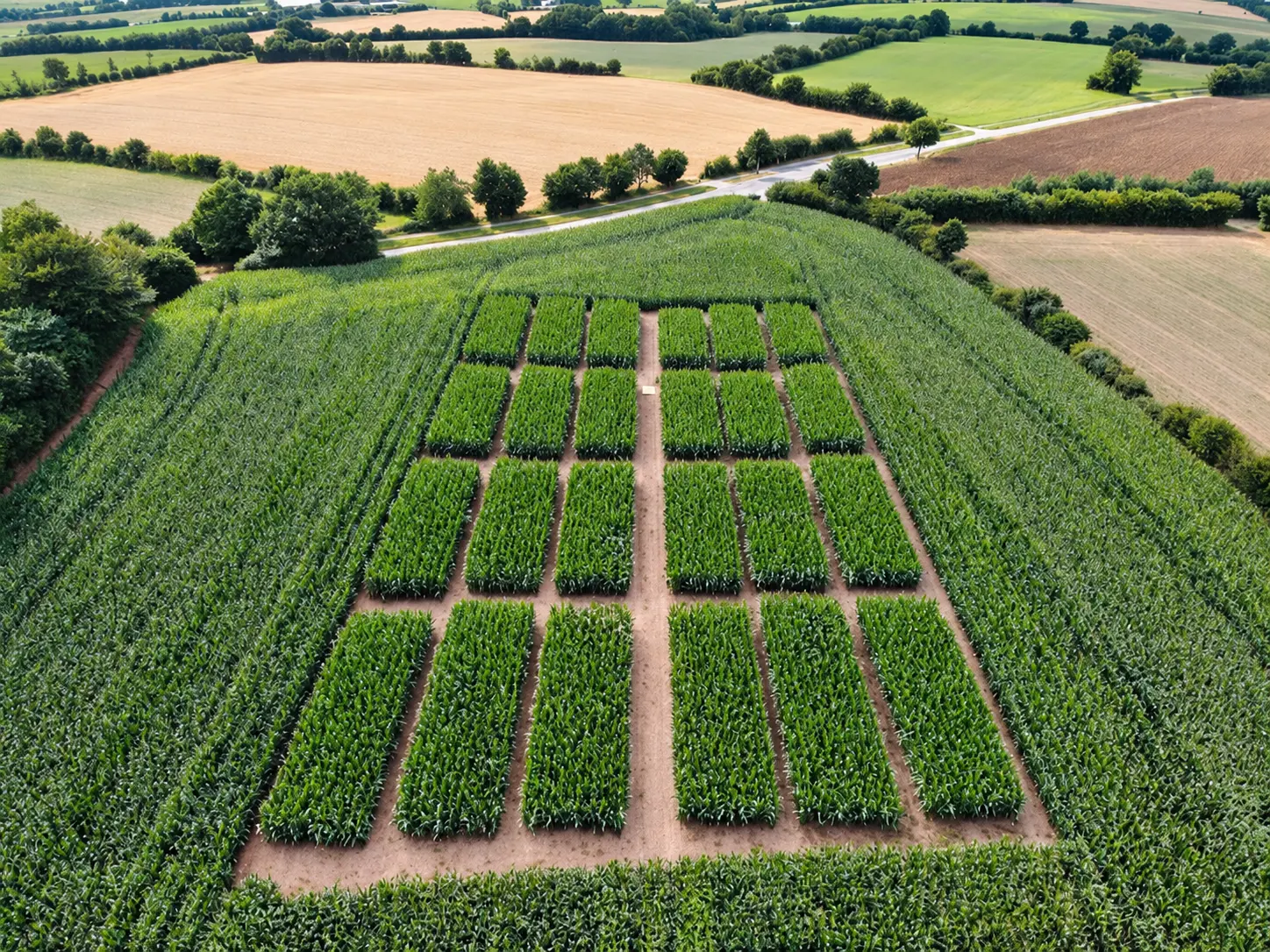
Field trial 01
Under-root fertilisation in maize.Observed from root to harvest.
A field comparison of six fertilisation strategies across ploughed and cultivated plots, carried out in Lindeberg during the 2020 maize season.
Original field documentationThe field question
Can the starting conditions shape what follows?
Trial focus
How do different under-root fertilisers and rates relate to early development, root architecture, maturity, cob development and harvested output?
Trial architecture
A controlled comparison inside a working field.
The plots were aligned to a 6 metre drill width. Each plot measured 20 by 6 metres, creating a 120 m² observation unit. The same six treatment variants were arranged across ploughed and cultivated ground.
Two tillage systems. Six nutrient strategies.
The Herbali treatment combined 1 dt/ha 20/20 starter fertiliser with 2 L/ha Herbali, applied by crop sprayer on 2 June.
2 dt/ha
1.5 dt/ha
2 dt/ha
1 dt/ha
+ Herbali 2 L/ha
2 dt/ha
1.5 dt/ha
2 dt/ha
1 dt/ha
+ Herbali 2 L/ha
Observation sequence
One season, followed step by step.
Assessments followed the crop from establishment through root and plant development to plot-by-plot harvest and laboratory analysis.
Sowing
Plots were staked, tilled and sown after cattle manure incorporation.
Herbali application
The Herbali plots received 2 L/ha by crop protection sprayer.
Roots measured
Plants at the six-leaf stage were excavated, measured and visually assessed.
Development tracked
Plant length, green mass, cobs, dry matter and nitrate were recorded.
Plot harvest
Each plot was chopped, weighed and sampled for AGROLAB analysis.
Recorded observations
Early differences were visible. Final conclusions stayed measured.
The strongest visual separation appeared during early development. Maturity and final quality indicators were more closely grouped, and the trial report did not establish a clear treatment effect for every endpoint.
Observed root length
The reported mean across all plots was 19.5 cm. The source also notes that overall plot differences were not statistically significant.
Ploughed Herbali plot
The cultivated Herbali plot measured 125 cm, compared with a reported all-plot mean of 110 cm.
Ploughed Herbali plot
The cultivated Herbali plot recorded 955 g. The measurement was based on sampled plants, not whole-plot harvested yield.
Tillage separation was larger than the difference within the Herbali pair.
Highest reported fine-root share in the topsoil
The same plants showed fewer deep basal roots, which the report identifies as a possible disadvantage under dry conditions.
Read the result in context. This was one site and one season, with limited plant sampling for several interim observations. The report found no treatment-linked maturity effect and no unequivocal overall result for quality or energy density. Differences in tillage also influenced several outcomes.
Documentary evidence
The field stays visible in the data.
Follow the trial from field layout and crop establishment to root assessment and harvest. Each image remains connected to the point in the season where it was recorded.
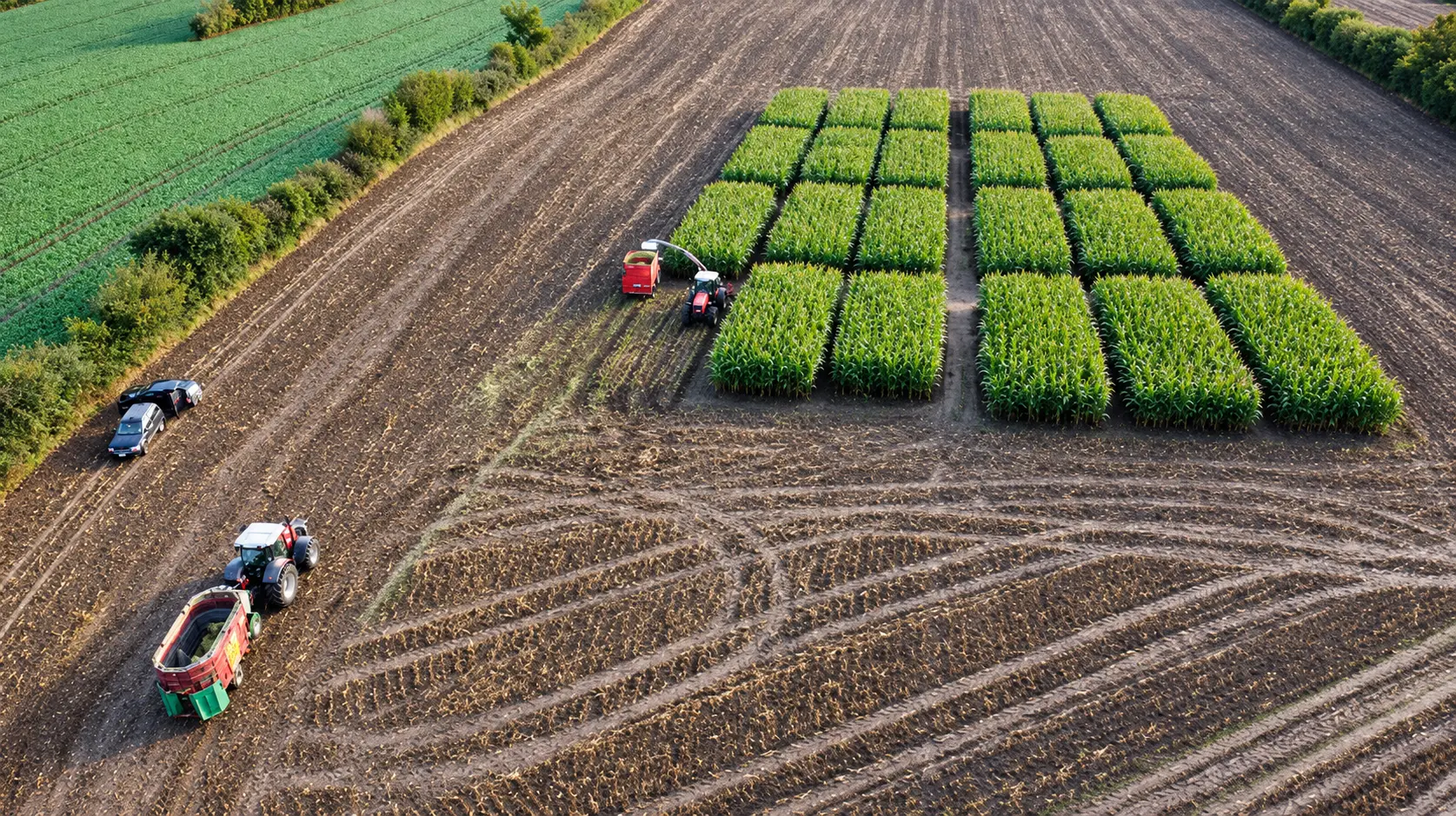 Plot-by-plot harvest
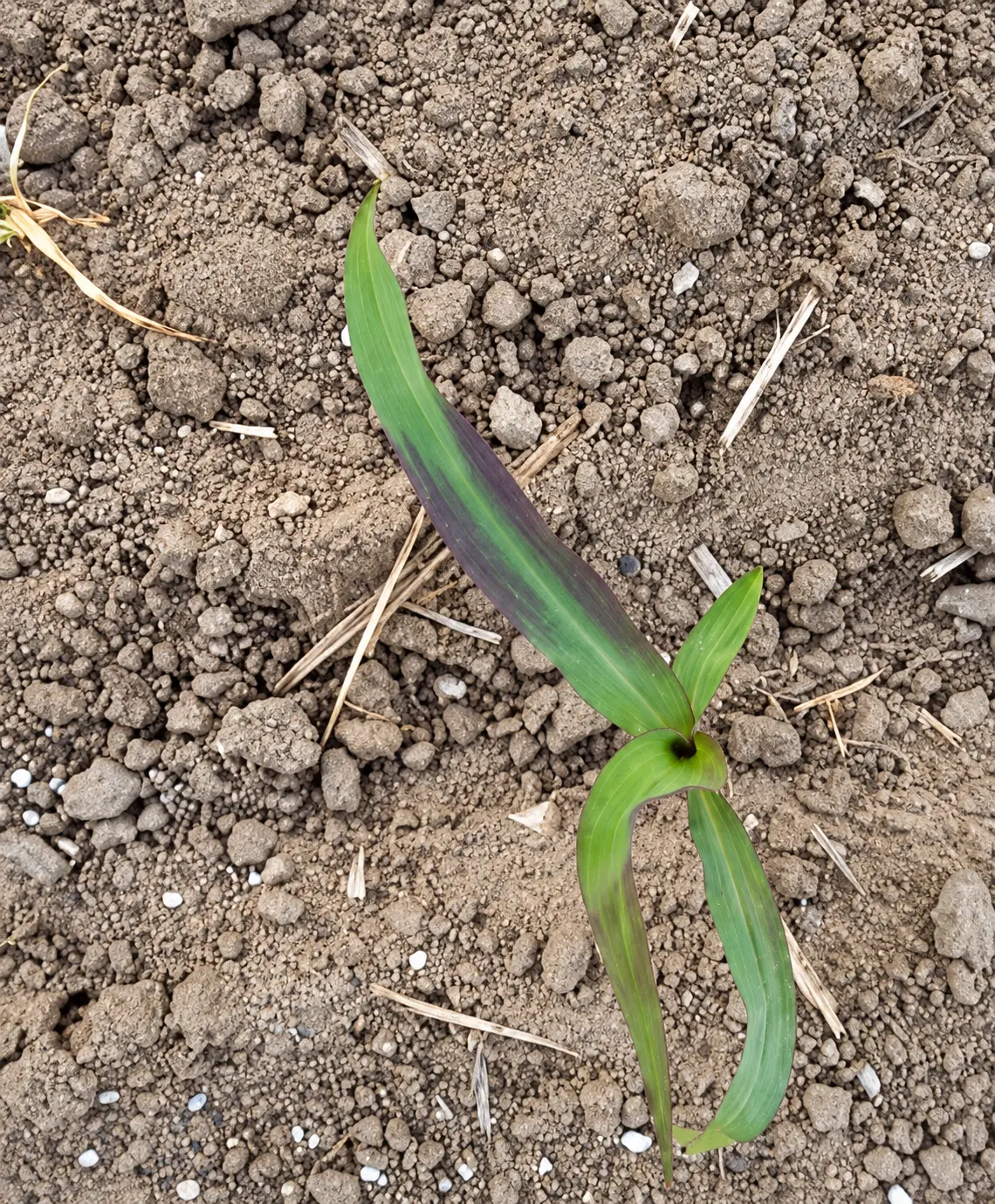 Early crop assessment
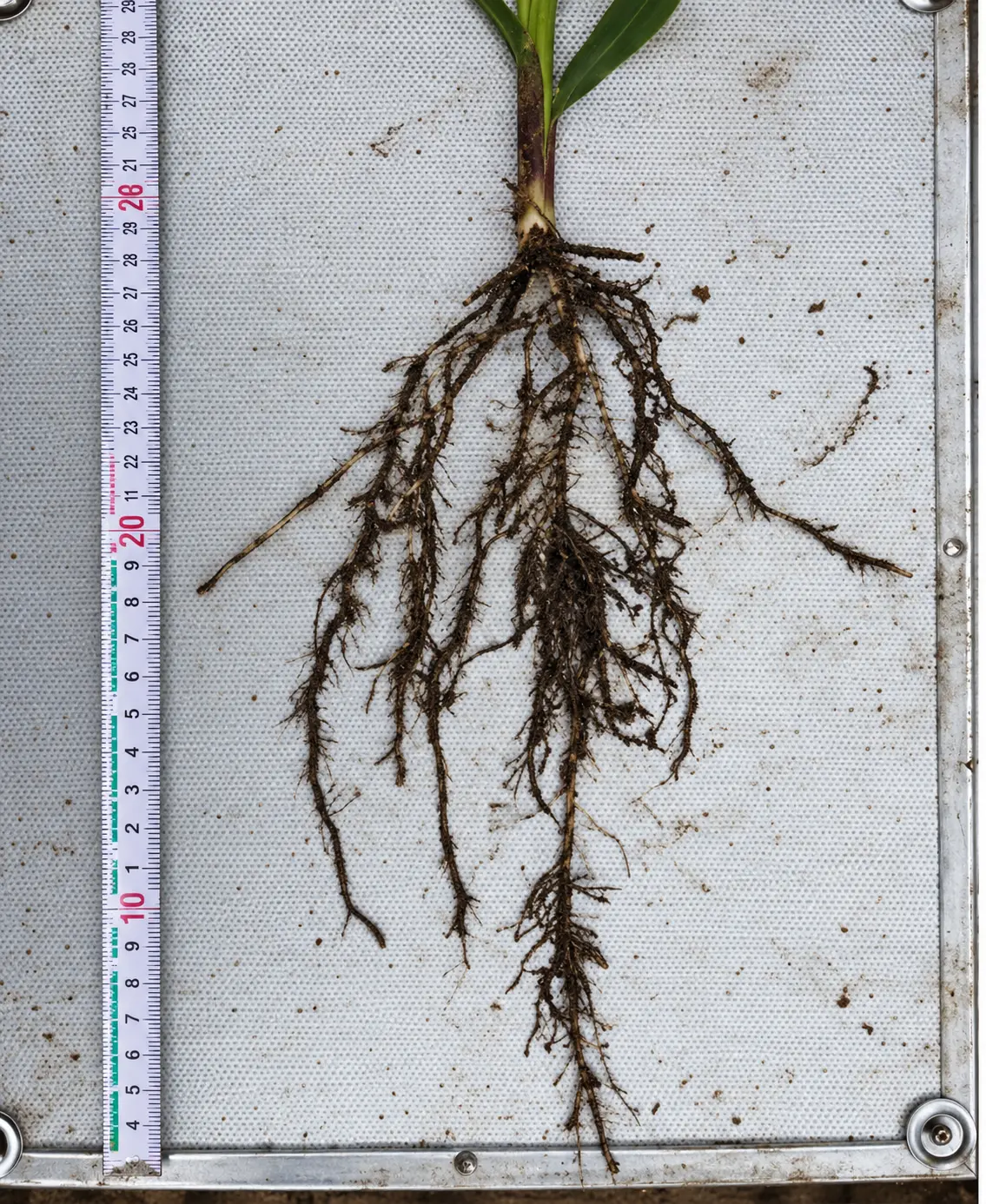 Herbali root assessment
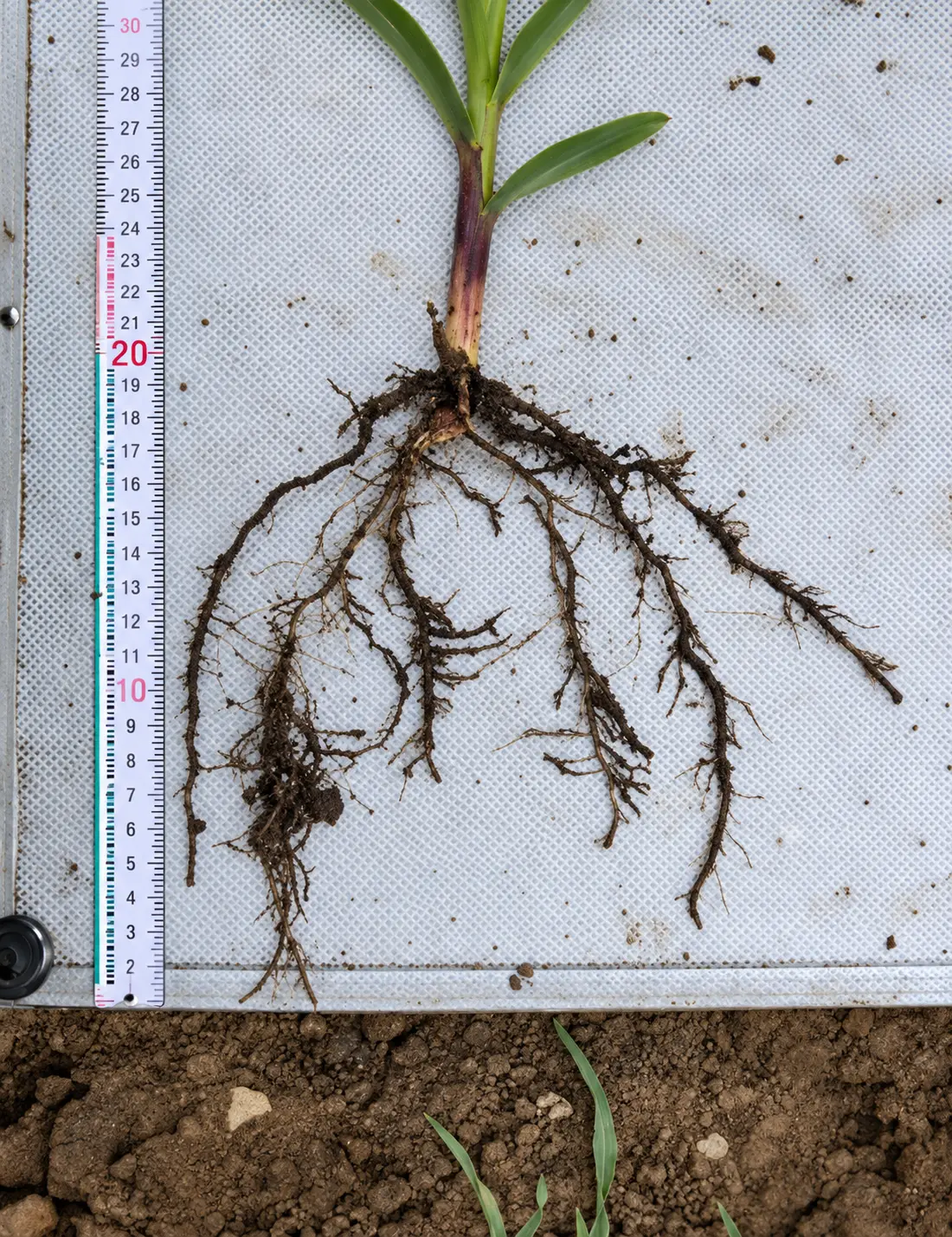 Comparator root assessment
What this trial contributes
A signal worth examining, not a conclusion detached from context.
The trial is most informative when early development, root architecture, tillage and final laboratory values are read together.
Early development showed the clearest separation.
The Herbali plots were reported among the strongest during root, plant-height and sampled green-mass assessments.
Root form matters alongside root amount.
A high fine-root share in the topsoil was accompanied by fewer deep basal roots. That trade-off may respond differently under other moisture conditions.
Final indicators remained close.
The report found no clear maturity effect and only small quality and energy-density differences, with tillage influencing the comparison.
Trial boundaries
What the evidence does not establish.
- It does not establish performance across different soils, climates, maize varieties or production systems.
- It does not separate treatment effects from every possible plot, tillage or seasonal influence.
- Several interim measurements were based on a small number of sampled plants.
- The source report did not identify statistically significant differences across all plots or endpoints.
A trial becomes useful when the context travels with it.
Discuss the field conditions, treatment position and observations with the Herbali team, or explore how a programme could be structured for your own crop system.